

Discover a new way of printmaking in this taster Carborundum & Drypoint workshop.
Versatile Printmaking techniques
Carborundum was invented by Henri Goetz in the 1960s, Carborundum traditionally uses different grades of fine grit and varnish adhered to a plate to produce a raised surface to print from onto paper. It has a particularly rich tonal quality and is fanatic for colour printing and experimental mark making.
In the workshop at West Hove Studios, we will be using Carborundum Gel specially developed for AKUA by Susan Rostow as It makes application and drying times easy.
For further information take a look at this You tube video:
Drypoint
Drypoint is an intaglio printing technique using tools such as etching needles and roulettes which are used to make lines in the plate surface which is then inked with printing ink, wiped off with scrim to leave just enough ink on the plate to print onto damped paper using a printing press. We will be using an etching needle on Drypoint plastic.
TASTER/INTRO WORKSHOP outline
Our aim is to enjoy making maks onto drypoint plates for printing combining fine line and tone.
After an introduction you will be given a demonstration of how to apply AKUA carborundum paste onto plastic sheet and make drypoint line marks.
You will then be shown how to ink up and print the plate through a printing press using monochrome or colour with oil-based printing inks or water based Akua inks on premium Somerset paper.
You will be encouraged to experiment with mark making, brushstrokes and line work. Remember- if this is your first time- to let yourself enjoy the process and not be too attached to the outcome, learning through any ‘mistakes’ and embracing the exciting world of printmaking & markmaking.
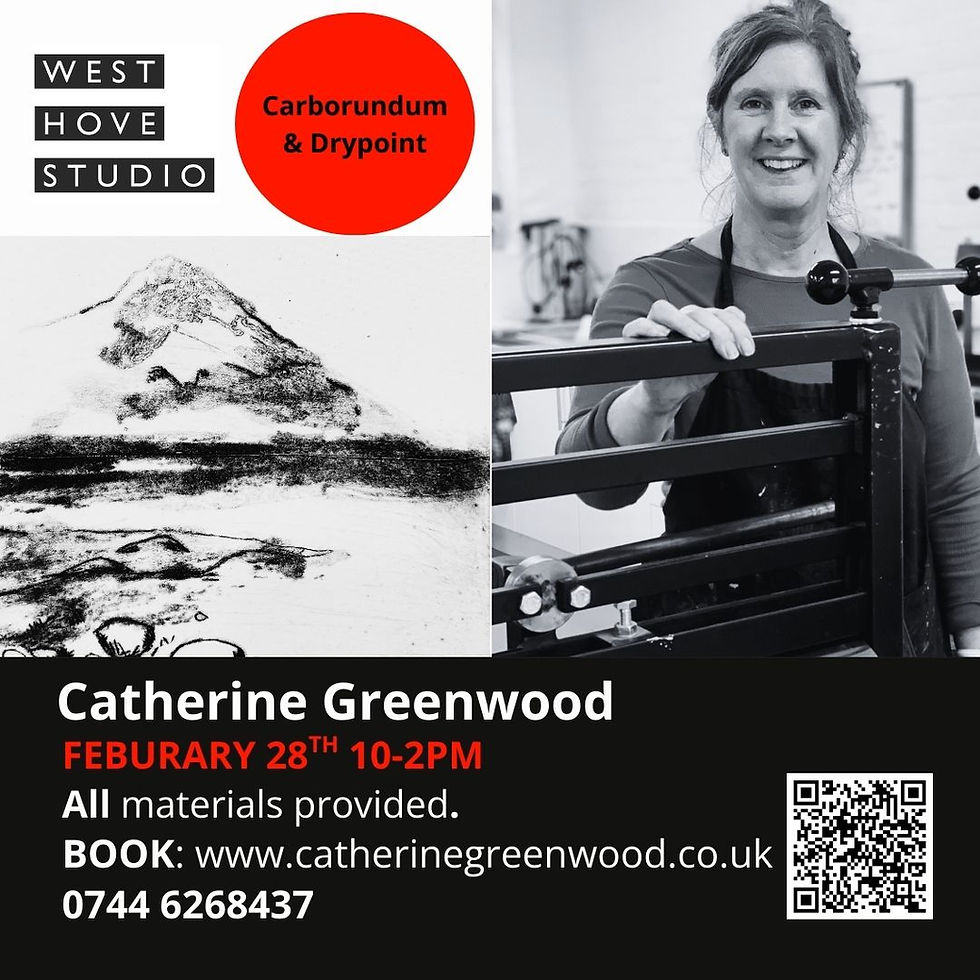
All materials will be provided at the workshop. You may take home your prints; a folder or portfolio is ideal for this. Once home, place the prints under heavy books preferably in blotting paper or newspaper to press them flat for 2-3 days.
Enjoy experimenting! These techniques can be used alongside other etching techniques.
Please subscribe to my newletter for future courses.


Comments